
Banquet payment tracking means knowing, for every booking, how much was invoiced, how much was paid and what is still outstanding, including amounts billed to companies. BanquetFirst Payments section shows outstanding, upcoming and past-due amounts, booking-wise balances, and lets teams send payment reminders and review what was sent.
What Is Banquet Payment Tracking?
Every banquet business has two kinds of revenue: the money already in the bank, and the money that has been earned on paper but not yet collected. The second kind is easy to forget. It sits quietly in invoices, verbal promises and corporate approval queues, and it only becomes visible when cash runs short before a busy season.
Banquet payment tracking is the habit of keeping both kinds in view. For every wedding, reception, corporate party or birthday, it answers three simple questions. How much did we bill? How much have we received? And how much is still owed, by whom, and since when?
The answers matter more than most owners realise. A venue can look fully booked and still struggle to pay suppliers if too much of its revenue is sitting with clients. Knowing your numbers turns that worry into a clear to-do list.
The Payment Terms Every Banquet Team Should Know
Payment dashboards use a handful of terms again and again. Once you know what each one means, reading them takes seconds.
Invoice Amount and Total Paid
The invoice amount is the full value you have billed for an event, including food, venue, add-ons and taxes. Total paid is what the client has actually paid so far, whether as an advance, instalments or a final settlement. The gap between the two is where all the action is.
Accounts Receivable
Accounts receivable is the total amount clients still owe you across all your bookings. In simple terms, it is the total invoiced amount minus the total paid. It tells you how much revenue you have earned on paper but not yet received.
Outstanding
Outstanding is another way of describing money that is still due. Dashboards often split it by time, such as outstanding this month and outstanding across all time, so you can separate fresh balances from old ones that have been sitting for a while.
Direct Payments
Direct payments are made by the guest or family themselves. Tracking payment sources matters because delays can happen for different reasons. Family payments may slip because of competing wedding expenses, while corporate payments may be delayed by paperwork, approvals or a missing purchase order.
Upcoming and Past Due
Upcoming payments are amounts that are due in the future but are not late yet. Past-due payments have crossed their due date and are still unpaid. Upcoming amounts need timely reminders. Past-due amounts need immediate follow-up.
A Worked Example: One Month at a Fictional Venue
Terms make more sense with numbers. Imagine a mid-sized banquet venue with just three active bookings this month. The names and figures below are made up purely to show how the numbers work together.
The first booking is a Saturday wedding for about 400 guests. The family has paid an advance, and the balance is due a week before the event. The second is a company's festive party, billed to the company under credit terms, with nothing paid yet. The third is a birthday party that took place last month, where a small balance was never cleared.
| Booking | Billing Type | Invoice Amount | Total Paid | Remaining | Status |
|---|---|---|---|---|---|
| Wedding reception | Direct | ₹8,00,000 | ₹3,00,000 | ₹5,00,000 | Upcoming |
| Corporate festive party | Corporate | ₹4,50,000 | ₹0 | ₹4,50,000 | Upcoming |
| Birthday party (last month) | Direct | ₹1,20,000 | ₹1,00,000 | ₹20,000 | Past due |
| Total | ₹13,70,000 | ₹4,00,000 | ₹9,70,000 |
Now read it the way a payment dashboard would. Accounts receivable is ₹9,70,000, which is the total invoiced minus the total paid. Outstanding direct is ₹5,20,000, and outstanding corporate payments are ₹4,50,000. Of this, ₹9,50,000 is upcoming and only ₹20,000 is past due.
At first glance, ₹20,000 looks too small to worry about. But it is the only amount that is already late, and the event it belongs to is over. Small past-due balances from finished events are the hardest to collect, because the client has already moved on. That is why past dues deserve attention before upcoming amounts, even when they are smaller.
There is a second lesson hidden in the example. If the venue only looked at "outstanding this month", the old birthday balance might never show up. A separate "all time" outstanding figure is what keeps old balances from disappearing from view. Many venues are surprised by how large that all-time number becomes when nobody checks it.
How Do You Reduce Late Payments?
Most late payments are not bad intent. They are forgotten, stuck in approvals or simply never asked for clearly. A few habits fix most of them.
Treat Direct and Corporate Clients Differently
For families paying directly, the best approach is a clear schedule and friendly reminders before each due date. For corporate clients, the key is paperwork. Agree on credit terms in writing before the event, collect a purchase order or approval reference, and confirm who in the accounts team will process the invoice. An invoice without the right reference can sit unpaid for weeks without anyone noticing.
Remind Before the Due Date, Not After
A reminder sent three days before a payment is due feels helpful. The same reminder sent three days after feels like chasing. Build reminders into your process so they go out on time for every booking, not only when someone remembers. If you already use WhatsApp to stay in touch with past guests, as explained in our WhatsApp marketing guide, the same channel works well for polite payment reminders.
Hold a Short Weekly Money Meeting
Fifteen minutes a week is enough. Look at past-due amounts first, then upcoming amounts for the next two weeks, then the all-time outstanding figure. Assign each past-due balance to one person with a clear next step. Weekly reviews catch problems while they are still small.
Keep Statements Ready to Share
Corporate accounts teams often ask for a clear statement before they release payment. Being able to filter bookings and download a booking-wise summary quickly saves days of back-and-forth.
Collecting what you have already earned is one of the easiest ways to increase banquet revenue, because it needs no new enquiries at all.
Inside BanquetFirst's Payments Section
BanquetFirst brings payment tracking into the same platform as your leads, bookings and calendar. Its Payments section is split into three parts.
Payment Dashboard
The dashboard shows a set of payment count cards at a glance. These include outstanding and direct payment amounts for the current month, total outstanding this month, current month revenue, upcoming payments, past-due payments, and total outstanding across all time. Reviewing payment amounts by booking and client type makes it easier to see where delays are coming from.
Payment Details
Payment Details gives the booking-wise view. At the top, it shows the total invoice amount, total paid and accounts receivable. Below, each booking appears with the guest name, contact number, event date, event type, event time, venue, remaining balance and total paid. Teams can filter by venue, event date, event month, event year and event type, search by name or number, use advanced search, choose which columns to show and download the data, which is useful when a corporate client asks for a statement.
Payment Reminder
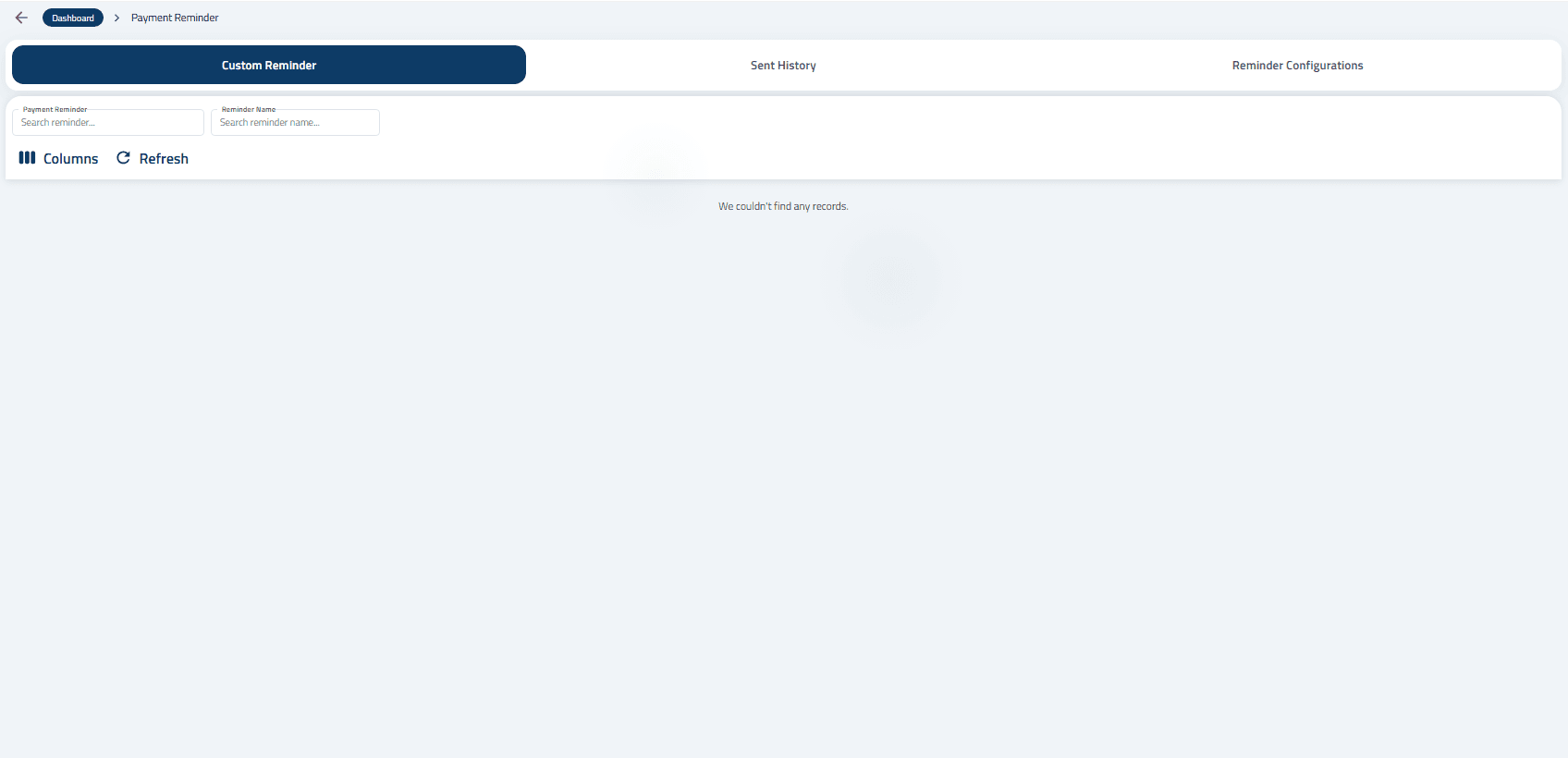
The Payment Reminder area has three tabs: Custom Reminder, Sent History and Reminder Configurations. Teams can set up custom reminders, see which reminders have already gone out, and configure how reminders work, so no balance depends on someone remembering to follow up.
Beyond the Payments section, BanquetFirst is built for Indian venues with GST-compliant invoicing, and its Guest 360° profile keeps each guest's bookings, interactions and payments together in one place.
Know Your Numbers Before the Season Gets Busy
Banquet payment tracking is not about complicated accounting. It comes down to a few clear numbers: what you billed, what you received, what is still outstanding, and which balances are already past due. Reminding clients before due dates and reviewing past dues every week can bring in money you have already earned. With wedding and festive season ahead, this is the right moment to get those numbers under control. To see your own outstanding, upcoming and past-due amounts in one place, start free trial with BanquetFirst.
Frequently Asked Questions
What is accounts receivable for a banquet hall? Total invoiced amount minus total paid: the money clients still owe you.
What is the difference between upcoming and past-due payments? Upcoming payments aren't late yet; past-due payments have already missed their deadline.
How can I reduce late payments from corporate clients? Agree written credit terms, collect a PO and remind before due dates.
How does BanquetFirst help with payment tracking? BanquetFirst tracks outstanding, upcoming and past-due payments, plus reminders.